Description
overall appearance
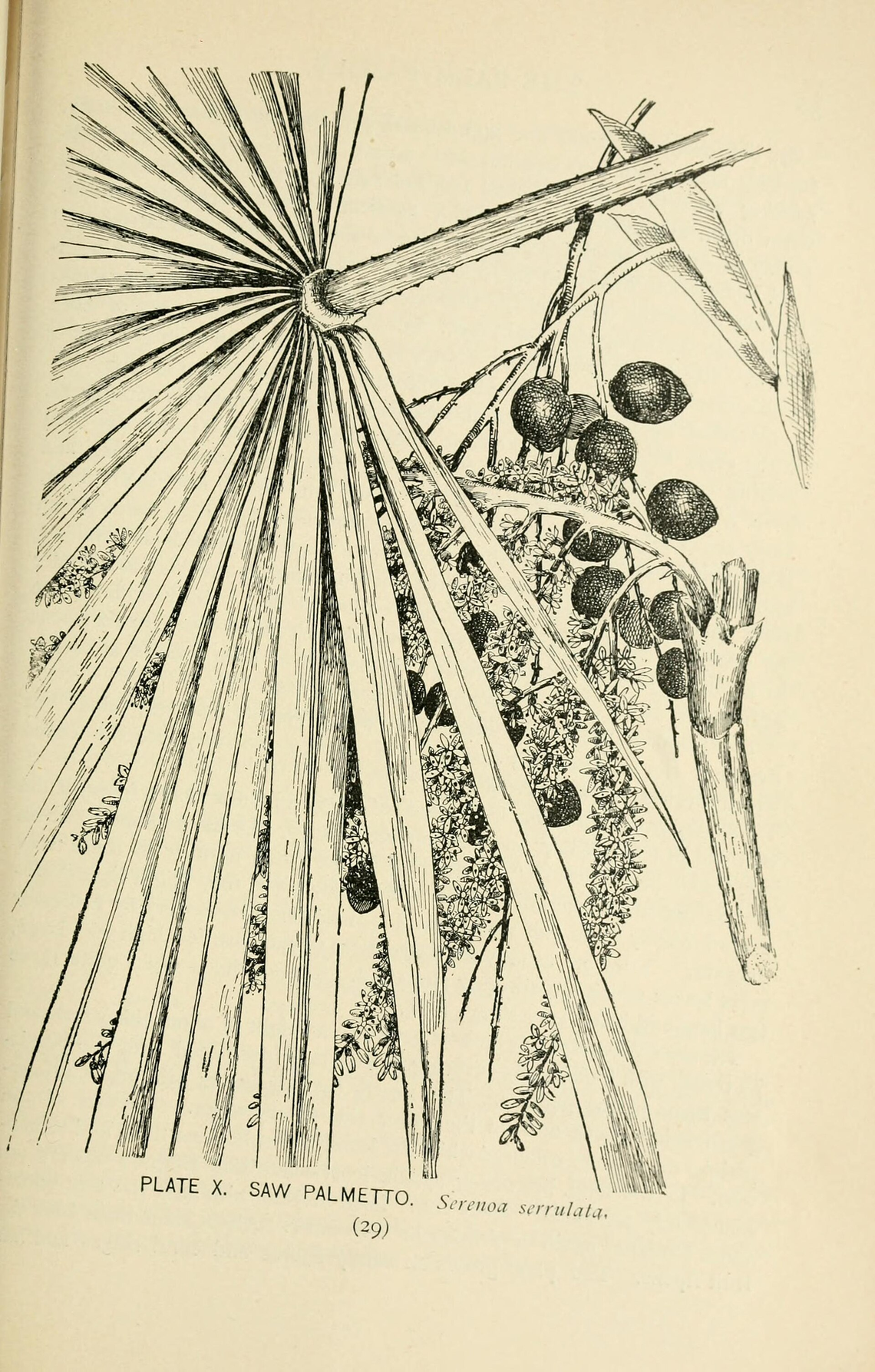
Small, slow-growing palm with fan-shaped leaves and sharp-toothed leaf stems; typically grows 3-6 feet tall with a creeping or underground trunk.
roots
Extensive underground rhizome system that can spread horizontally for many feet; roots are fibrous and help the plant survive fires and harsh conditions.
stem
Usually underground or prostrate trunk (rhizome) that can be several feet long; occasionally forms short, above-ground trunks 1-3 feet tall.
leaves
Large, fan-shaped (palmate) leaves 2-3 feet across with 18-20 segments; leaf stems (petioles) are armed with sharp, curved spines along the margins.
flowers
Small, creamy white flowers arranged in large, branched clusters (panicles) that emerge from among the leaves; flowers are unisexual with male and female flowers on separate plants.
fruits/seeds
Dark purple to black, olive-sized berries (drupes) about 1/2 inch long; fruits ripen from September to January and are the primary medicinal part of the plant.
Active Compounds
Traditional Uses
- Urinary tract disorders and difficult urination
- Prostate enlargement and inflammation
- Reproductive health and libido enhancement
- Respiratory conditions and coughs
- Digestive problems and loss of appetite
- General tonic for debility and weakness
Modern Applications
- Benign prostatic hyperplasia (BPH) symptom relief
- Lower urinary tract symptoms in men
- Androgenetic alopecia (male pattern baldness)
- Anti-inflammatory effects
- Potential anti-cancer properties
- Hormonal balance support
⚠️ Safety Information
Contraindications
- Hormone-sensitive conditions (prostate cancer, breast cancer)
- Planned surgery involving anesthesia
- Known allergy to palm family plants
Side Effects
- Mild gastrointestinal upset or nausea
- Dizziness or headache (rare)
- Decreased libido in some individuals
- Breast tenderness (very rare)
Drug Interactions
- Anticoagulant medications (potential bleeding risk)
- Hormonal medications and contraceptives
- Iron absorption may be reduced
- Potential interaction with finasteride and other 5-alpha reductase inhibitors
Parts Used
- Ripe berries/fruits (primary medicinal part)
- Occasionally leaves in traditional applications
Preparation Methods
1-2 tablespoons dried berries per cup water, simmer 15-20 minutes
1:5 ratio in 60% alcohol, 2-4 ml twice daily
160mg twice daily of liposterolic extract
Concentrated fatty acid and sterol extract
320mg daily of standardized extract containing 85-95% fatty acids
Related Plants
Acai
Euterpe oleracea
Ashitaba
Angelica keiskei
Basil
Ocimum basilicum
Birch
Betula spp.
Cardamom
Elettaria cardamomum
Chaste Tree
Vitex agnus-castus