Description
overall appearance
Evergreen aromatic shrub growing 2-6 feet tall with needle-like leaves and small blue, purple, pink, or white flowers; forms dense, woody bushes.
roots
Deep taproot system with spreading lateral roots; roots are woody and help anchor the plant in rocky soils.
stem
Woody, square stems (characteristic of mint family) with gray-brown bark; young stems are green and become woody with age.
leaves
Opposite, linear, needle-like leaves 1/2 to 1.5 inches long; leaves are dark green above, white-woolly beneath, with strongly aromatic scent.
flowers
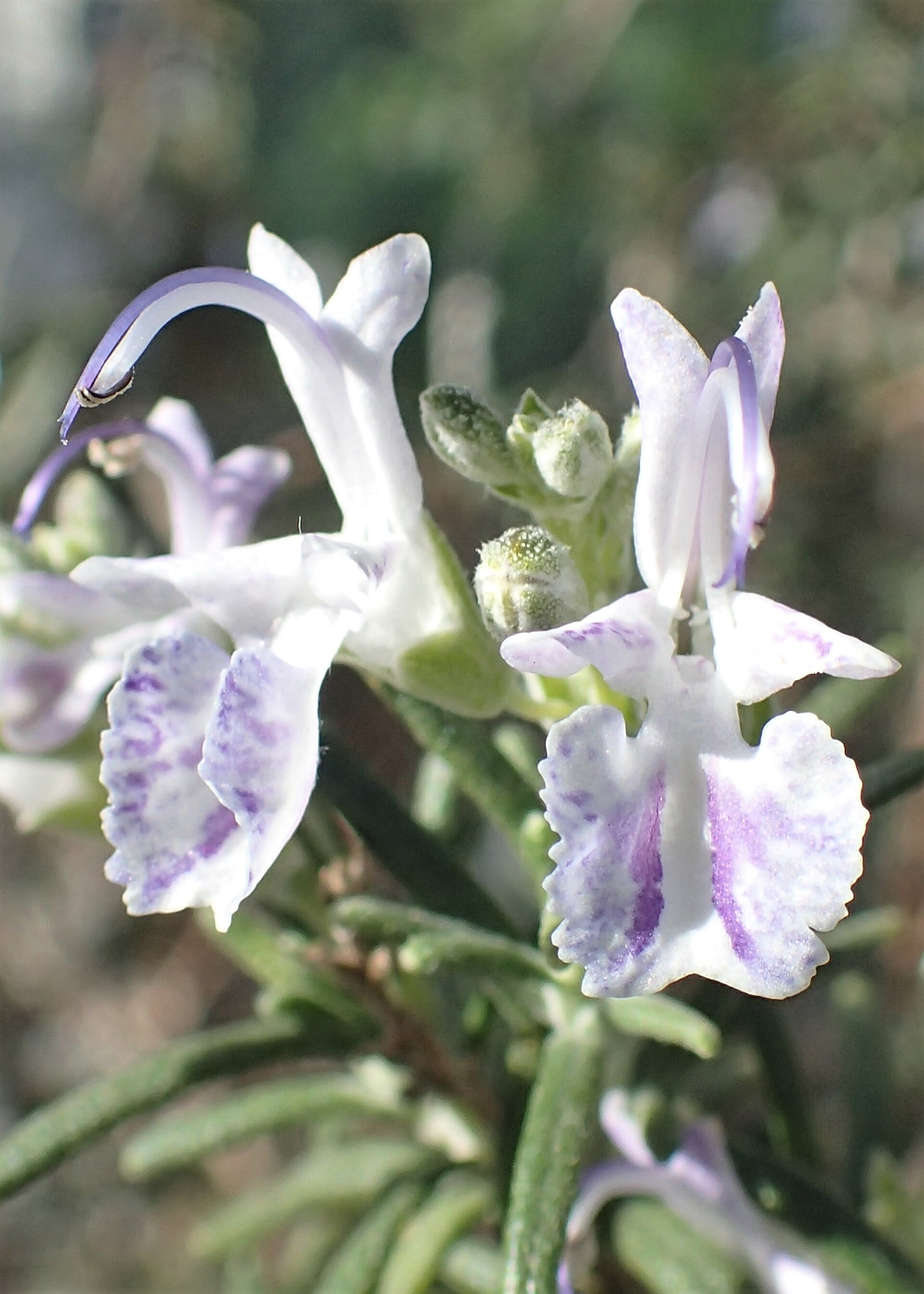
Small, tubular, two-lipped flowers in clusters along stems; flowers are typically blue but can be purple, pink, or white; blooms year-round in suitable climates.
fruits/seeds
Small, brown nutlets containing one seed each; fruits develop from flowers and are dispersed by gravity and animals.
Active Compounds
Traditional Uses
- Memory enhancement and cognitive function
- Circulation problems and poor blood flow
- Digestive complaints and loss of appetite
- Headaches and mental fatigue
- Hair loss and scalp conditions
- Rheumatism and joint pain
- Nervous exhaustion and depression
Modern Applications
- Cognitive enhancement and memory support
- Antioxidant protection and anti-aging
- Circulation improvement and cardiovascular health
- Antimicrobial effects for infections
- Anti-inflammatory properties
- Hair growth stimulation
- Mood enhancement and stress relief
⚠️ Safety Information
Contraindications
- Pregnancy in large medicinal doses (safe in culinary amounts)
- Epilepsy (high doses of essential oil may trigger seizures)
- High blood pressure (large amounts may raise blood pressure)
Side Effects
- Generally very safe with minimal side effects
- Possible skin irritation from essential oil
- Allergic reactions in sensitive individuals
- Gastrointestinal upset with very large doses
Drug Interactions
- Blood-thinning medications (may enhance effects)
- Diabetes medications (may affect blood sugar)
- Blood pressure medications (may interact)
- Iron supplements (may enhance absorption)
Parts Used
- Leaves (primary medicinal part)
- Flowering tops
- Essential oil from aerial parts
Preparation Methods
1-2 teaspoons dried leaves per cup boiling water, steep 5-10 minutes
1:5 ratio in 45% alcohol, 2-4 ml twice daily
2-3 drops diluted in carrier oil for topical use
Strong tea used as final rinse for hair
Fresh or dried leaves in cooking (medicinal benefits)
Related Plants
Basil
Ocimum basilicum
Cat's Whiskers / Java Tea
Orthosiphon aristatus
Catnip
Nepeta cataria
Angelica
Angelica archangelica
Blue Vervain
Verbena hastata
Celery Seed
Apium graveolens