Description
overall appearance
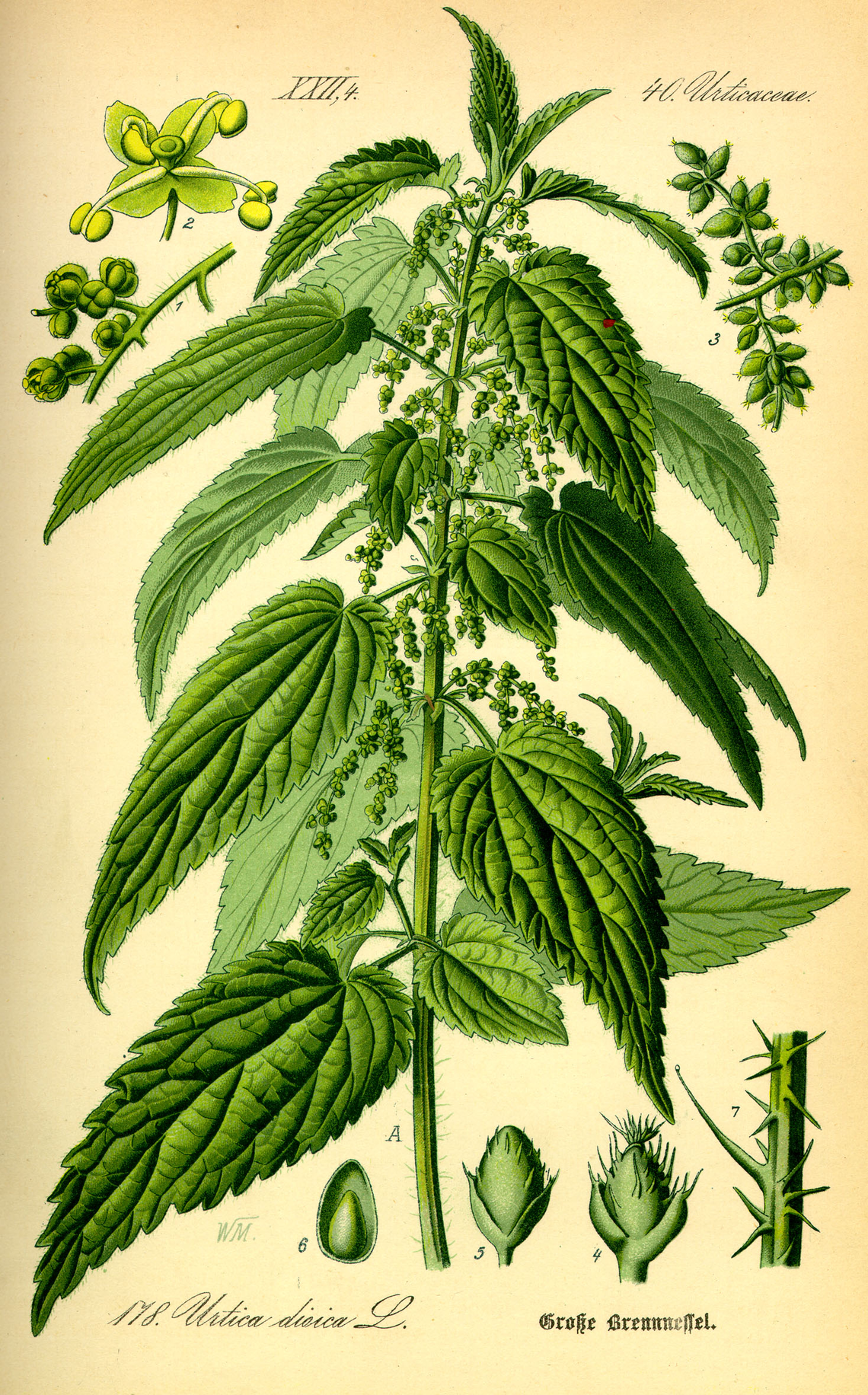
Perennial herb growing 3-7 feet tall with serrated leaves covered in stinging hairs; forms dense colonies.
roots
Creeping rhizome system with extensive fibrous roots; spreads aggressively through underground runners.
stem
Square, hollow stems with stinging hairs (trichomes); green color; branching pattern creates bushy growth.
leaves
Opposite, serrated leaves 2-6 inches long; heart-shaped base with pointed tip; covered in tiny stinging hairs.
flowers
Small, greenish flowers in drooping clusters; dioecious (male and female flowers on separate plants); appear in summer.
fruits/seeds
Small, oval achenes; wind-dispersed; important food source for many butterfly species and birds.
Active Compounds
Traditional Uses
- Arthritis and joint pain
- Allergies and hay fever
- Urinary tract health and prostate issues
- Anemia and iron deficiency
- Hair loss and scalp health
- Eczema and skin conditions
Modern Applications
- Benign prostatic hyperplasia (BPH)
- Seasonal allergies and rhinitis
- Osteoarthritis pain and inflammation
- Iron deficiency anemia
- Blood sugar regulation
- Kidney and urinary support
⚠️ Safety Information
Contraindications
- Fresh plant contact (causes stinging)
- Pregnancy (may stimulate uterine contractions)
- Edema due to heart or kidney problems
- Low blood pressure
Side Effects
- Generally well-tolerated when properly prepared
- Mild digestive upset initially
- Skin irritation with fresh plant contact
- Possible diuretic effects
Drug Interactions
- Blood pressure medications (may enhance effects)
- Diabetes medications (may lower blood sugar)
- Blood-thinning medications
- Diuretic medications
Parts Used
- Leaves (primary medicinal use - must be dried or cooked)
- Roots (for prostate health)
- Seeds (nutritional and reproductive health)
- Young shoots (culinary and medicinal)
Preparation Methods
2-3 teaspoons dried leaves per cup boiling water; steep 10-15 minutes
Roots simmered 20 minutes for prostate support
1:3 ratio with 50% alcohol; macerate dried leaves 4 weeks
Dried leaves reconstituted for topical anti-inflammatory use
Dried leaves in carrier oil for hair and scalp treatment
Related Plants
Alfalfa
Medicago sativa
Birch
Betula spp.
Amla / Indian Gooseberry
Phyllanthus emblica
Bhringaraj
Eclipta prostrata
Blue Cohosh
Caulophyllum thalictroides
Burdock
Arctium lappa