Description
overall appearance
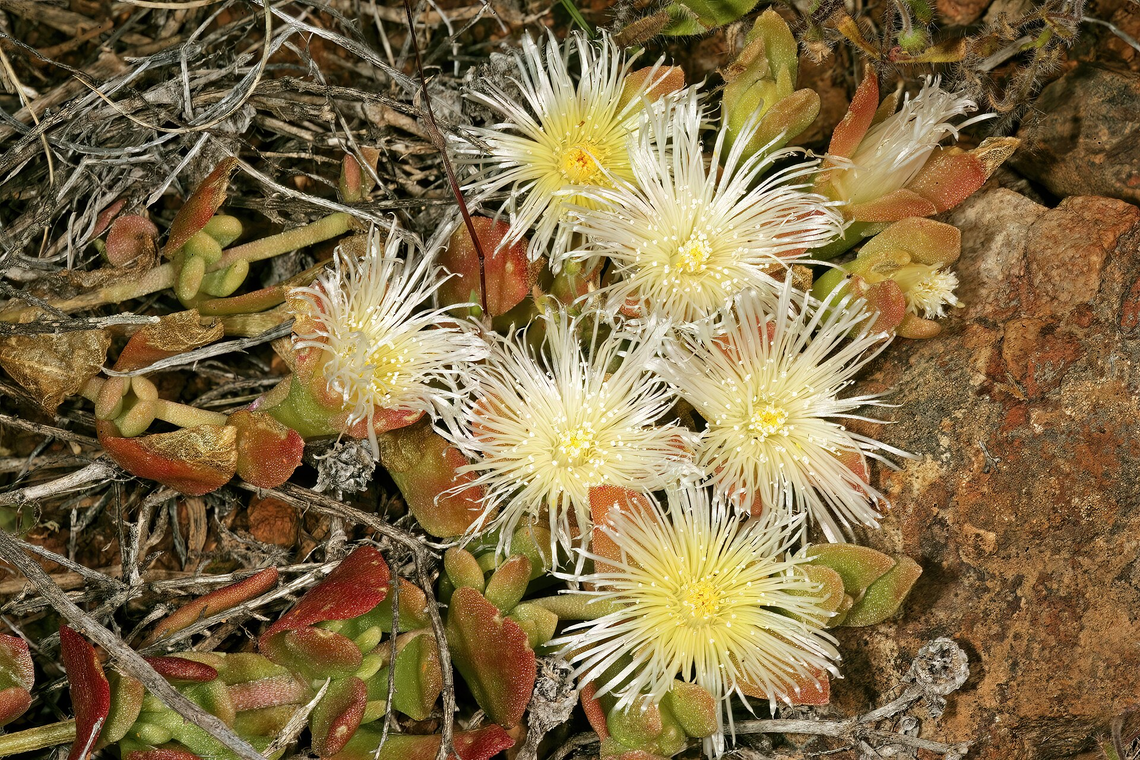
Kanna is a low-growing, succulent groundcover plant forming mats or clumps up to 12 inches tall and 3 feet wide.
roots
Thick, fleshy taproot stores water and nutrients, adapted to arid conditions. Fibrous secondary roots spread near the surface.
stem
Thick, succulent stems are prostrate or ascending, often reddish in color, and covered with small, fleshy leaves.
leaves
Small, succulent leaves are triangular to diamond-shaped, about 1/2 inch long, blue-green to gray-green in color.
flowers
Small, white to pale yellow flowers appear singly or in small clusters. Flowers have numerous thin petals and open in afternoon sunlight.
fruits/seeds
Small capsules contain tiny seeds that are dispersed when the capsule opens during rain.
Active Compounds
Traditional Uses
- Mood enhancement and euphoria
- Anxiety and stress relief
- Pain management and toothache
- Thirst and hunger suppression during long journeys
- Social and ceremonial use
- Depression and melancholy
Modern Applications
- Natural mood enhancer and antidepressant
- Anxiety and stress management
- Cognitive enhancement and focus
- Addiction recovery support
- Natural alternative to synthetic mood medications
⚠️ Safety Information
Contraindications
- Pregnancy and breastfeeding
- History of heart conditions
- Severe mental health disorders
- Use with psychiatric medications
Side Effects
- Possible headache and nausea
- Dizziness in sensitive individuals
- Potential for dependence with overuse
- Possible anxiety with excessive doses
Drug Interactions
- May interact with antidepressant medications (SSRIs, MAOIs)
- Possible interactions with heart medications
- May enhance effects of other psychoactive substances
- Caution with blood pressure medications
Parts Used
- Aerial parts (stems and leaves)
- Traditionally fermented plant material
Preparation Methods
Traditional fermentation process increases alkaloid bioavailability
Small amounts chewed for immediate effects
Dried plant material smoked in small amounts
200-400mg fermented material per cup
Alcohol extraction of fermented material
Related Plants
Oat Straw
Avena sativa
Angelica
Angelica archangelica
Bacopa
Bacopa monnieri
Black Cohosh
Cimicifuga racemosa
Chamomile
Matricaria chamomilla
Hemp / CBD
Cannabis sativa