Description
overall appearance
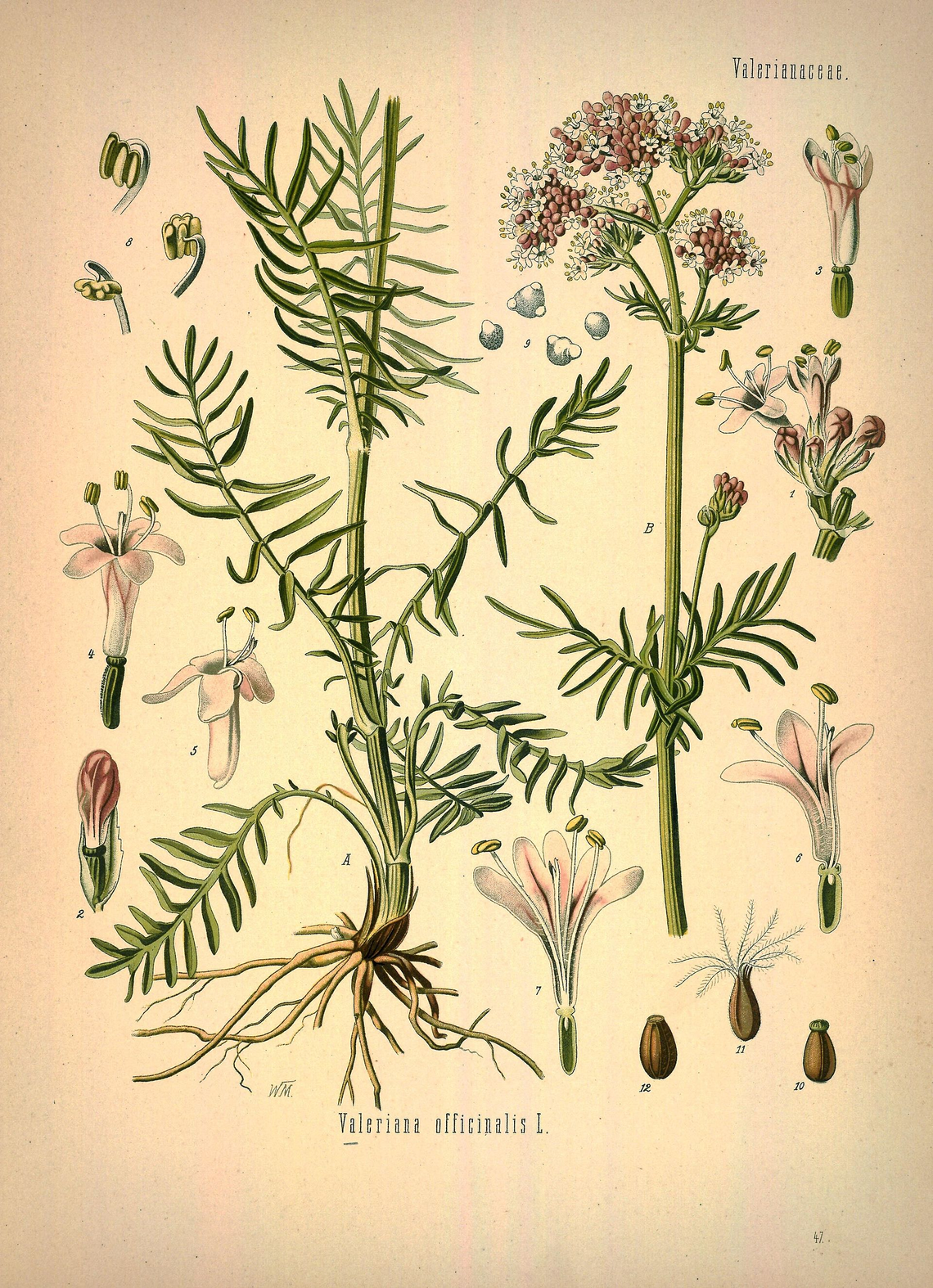
Perennial herb growing 3-5 feet tall with deeply divided leaves and clusters of small, fragrant pink or white flowers; strong, distinctive odor when crushed.
roots
Thick, short rhizome with numerous fibrous roots; roots are light brown externally, whitish internally, with a strong, characteristic pungent odor often described as "dirty socks."
stem
Erect, hollow, grooved stems that are smooth or slightly hairy; stems branch at the top to support flower clusters; height typically 2-4 feet.
leaves
Opposite, pinnately compound leaves with 7-25 lance-shaped leaflets; leaflets are serrated and dark green; basal leaves are larger than stem leaves.
flowers
Small, tubular flowers in dense, terminal flat-topped clusters (corymbs); flowers are pale pink to white, sweetly fragrant, blooming from June to September.
fruits/seeds
Small, dry, one-seeded fruits (achenes) with feathery plumes (pappus) that aid in wind dispersal; seeds ripen in late summer.
Active Compounds
Traditional Uses
- Sleep aid and treatment for insomnia
- Anxiety and nervous tension relief
- Digestive complaints and stomach spasms
- Menstrual pain and irregularities
- Headache and migraine relief
- Epilepsy and seizure disorders (historical use)
Modern Applications
- Sleep disorders and insomnia treatment
- Anxiety and stress management
- Restless leg syndrome
- ADHD symptoms in children (adjunctive therapy)
- Menopausal symptoms
- Muscle tension and spasms
⚠️ Safety Information
Contraindications
- Pregnancy and breastfeeding (insufficient safety data)
- Children under 3 years old
- Severe liver disease
- Before surgery requiring anesthesia
Side Effects
- Drowsiness and fatigue (intended effect)
- Headache with some individuals
- Gastrointestinal upset
- Vivid dreams or nightmares in some users
- Hangover-like feeling with excessive doses
Drug Interactions
- Sedatives and sleep medications (enhanced effects)
- Alcohol (increased sedation)
- Antidepressants and anxiolytics
- Antihistamines with sedating properties
Parts Used
- Roots and rhizomes (primary medicinal part)
- Occasionally aerial parts during flowering
Preparation Methods
1-2 teaspoons dried root per cup boiling water, steep 15-20 minutes
1 tablespoon chopped root per cup water, simmer 15 minutes
1:5 ratio in 70% alcohol, 1-3 ml before bedtime
300-600mg standardized extract 30 minutes before bed
Strong decoction added to bathwater for relaxation
Related Plants
Bacopa
Bacopa monnieri
Catnip
Nepeta cataria
Hemp / CBD
Cannabis sativa
Hops
Humulus lupulus
Lemon Balm
Melissa officinalis
Lemongrass
Cymbopogon citratus