Description
overall appearance
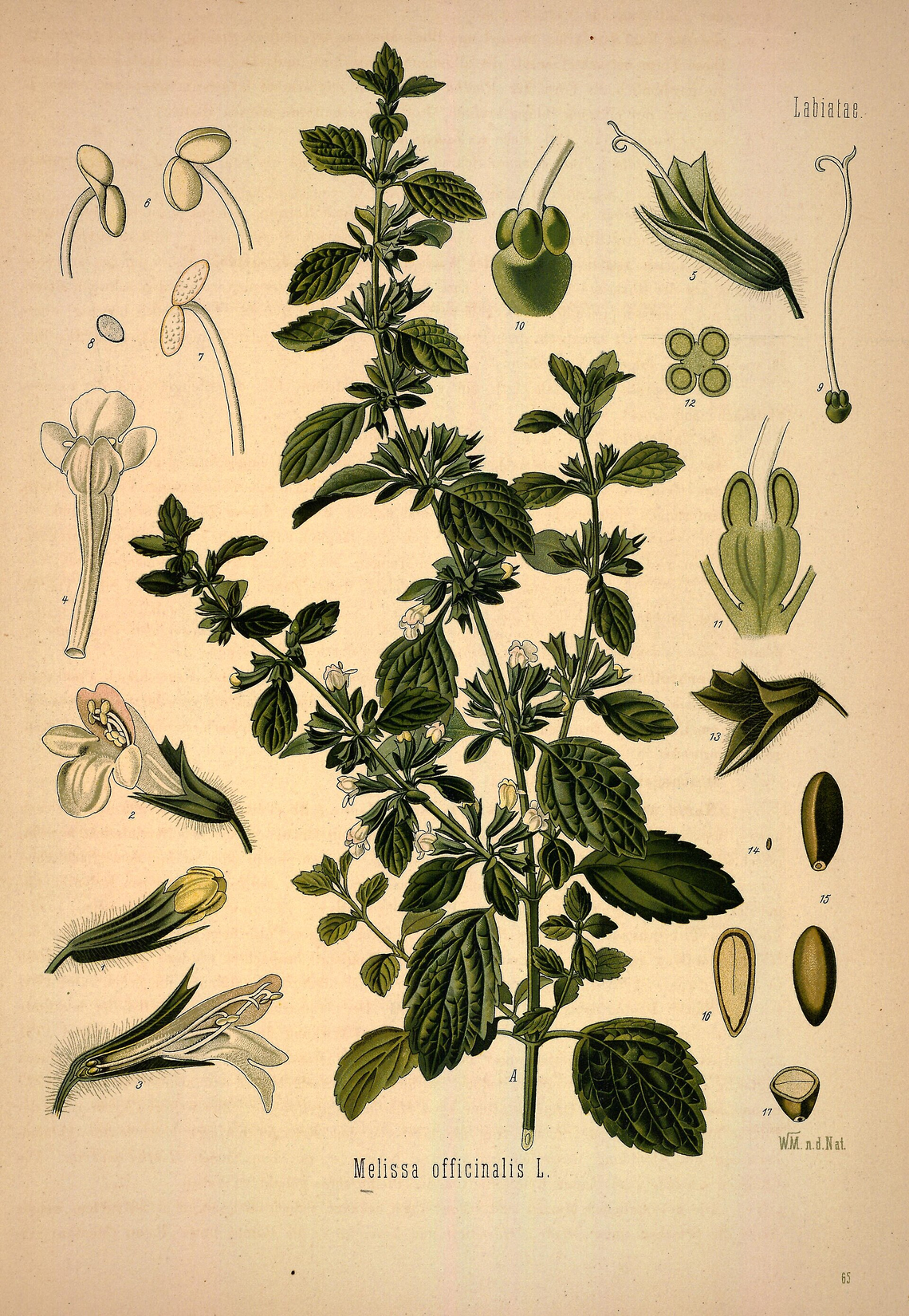
Perennial herb growing 2-3 feet tall with square stems characteristic of mint family and intense lemon fragrance.
roots
Creeping rhizome system with fibrous roots; spreads readily through underground runners.
stem
Square, hollow stems typical of mint family; green color with possible reddish tinge; branching extensively.
leaves
Opposite, heart-shaped leaves 2-3 inches long; serrated margins; bright green color; strongly lemon-scented when crushed.
flowers
Small, white to pale yellow tubular flowers in whorls along stem; appear in summer; highly attractive to bees.
fruits/seeds
Small, dark brown nutlets containing four seeds; produced after flowering but plant spreads primarily by rhizomes.
Active Compounds
Traditional Uses
- Anxiety, stress, and nervous tension
- Insomnia and sleep disorders
- Digestive disorders and stomach upset
- Headaches and migraines
- Cold sores and viral infections
- Heart palpitations and nervous heart
Modern Applications
- Anxiety and stress management
- Sleep quality improvement
- Cognitive function and memory support
- Antiviral properties (herpes simplex)
- ADHD and hyperactivity in children
- Thyroid support and regulation
⚠️ Safety Information
Contraindications
- Hypothyroidism (may interfere with thyroid hormone)
- Scheduled surgery within 2 weeks
- Glaucoma (may increase intraocular pressure)
Side Effects
- Generally very well-tolerated
- Possible mild drowsiness with large doses
- Rare skin sensitivity with topical use
- Digestive upset in very sensitive individuals
Drug Interactions
- Thyroid medications (may interfere with function)
- Sedative medications (may enhance effects)
- Glaucoma medications
- Barbiturates and benzodiazepines
Parts Used
- Leaves (fresh or dried - primary medicinal use)
- Flowering tops
- Essential oil from leaves
- Whole aerial parts
Preparation Methods
2-3 teaspoons fresh leaves or 1-2 teaspoons dried per cup; steep 10-15 minutes
Not typically used due to volatile oil content
1:5 ratio with 45% alcohol; macerate fresh leaves 2-3 weeks
Fresh crushed leaves for cold sores and minor wounds
Fresh leaves in carrier oil for topical calming applications
Related Plants
Basil
Ocimum basilicum
Cat's Whiskers / Java Tea
Orthosiphon aristatus
Catnip
Nepeta cataria
Lemongrass
Cymbopogon citratus
Coptis / Goldthread
Coptis chinensis
Hemp / CBD
Cannabis sativa