Motherwort
Leonurus cardiaca
Description
overall appearance
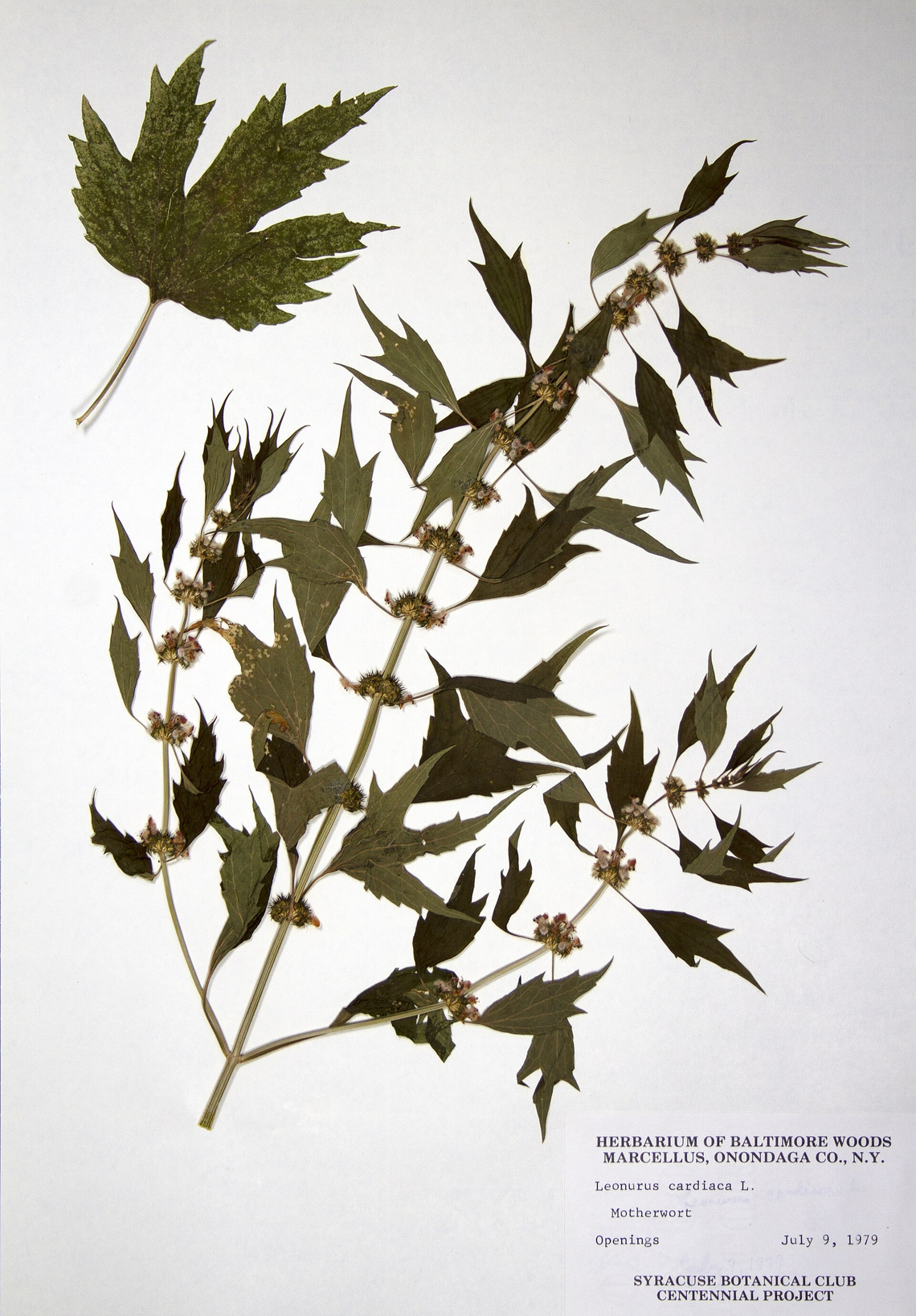
Motherwort is a tall perennial herb growing 3-5 feet tall with an upright, branching growth habit and distinctive palmate leaves.
roots
Fibrous root system with short rhizomes that form clumps rather than spreading aggressively.
stem
Square stems characteristic of mint family, erect and sturdy, often purplish and covered with fine hairs.
leaves
Distinctive palmately lobed leaves become increasingly divided toward the top of the plant. Lower leaves are larger (2-4 inches) and less divided.
flowers
Small pink to white tubular flowers are arranged in dense whorls around the stem at leaf nodes. Flowers have spiny calyces.
fruits/seeds
Small, brown nutlets (typically 4 per flower) are three-angled and topped with spiny sepals.
Active Compounds
Traditional Uses
- Heart conditions and palpitations
- Anxiety and nervous tension
- Menstrual irregularities and menopause
- Postpartum recovery
- Hypertension and circulation
- Insomnia and restlessness
Modern Applications
- Natural anxiety and stress relief
- Heart rhythm support and palpitations
- Women's reproductive health
- Menopausal symptom relief
- Mild hypotensive effects
- Nervous system calming
⚠️ Safety Information
Contraindications
- Pregnancy (may stimulate uterine contractions)
- Heavy menstrual bleeding
- Low blood pressure
- Cardiac medications without professional supervision
Side Effects
- Generally well-tolerated in moderate doses
- Possible drowsiness with large amounts
- May lower blood pressure
- Gastrointestinal upset in sensitive individuals
Drug Interactions
- May enhance effects of heart medications
- Possible interactions with blood pressure medications
- May increase effects of sedative medications
- Caution with anticoagulant drugs
Parts Used
- Aerial parts (leaves, stems, flowers)
- Fresh or dried plant material
Preparation Methods
1-2 tsp dried herb per cup water, steep 10-15 minutes
1:5 ratio in 40% alcohol, 2-4 ml three times daily
Traditional preparation from fresh flowering tops
For stronger bitter effects, simmer briefly
Powdered herb in standardized preparations
Related Plants
Basil
Ocimum basilicum
Cat's Whiskers / Java Tea
Orthosiphon aristatus
Catnip
Nepeta cataria
He Shou Wu
Reynoutria multiflora
Jiaogulan
Gynostemma pentaphyllum
Lemongrass
Cymbopogon citratus