Description
overall appearance
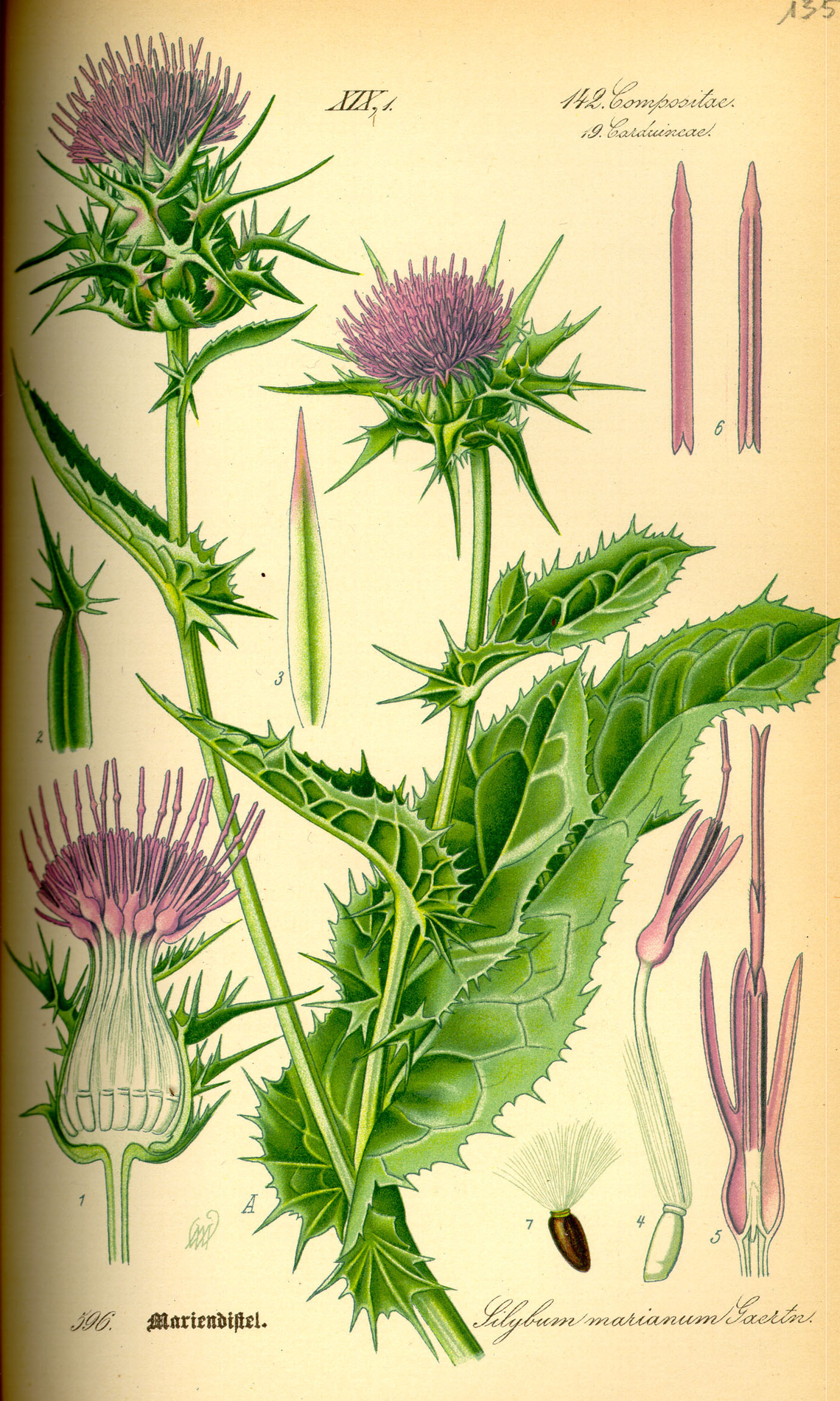
Annual or biennial herb growing 3-6 feet tall with distinctive spiny leaves marked by white veins and large purple flower heads surrounded by sharp spines.
roots
Deep taproot system with secondary fibrous roots; roots are pale yellow to brown and can penetrate deeply into soil for water access.
stem
Thick, branching stems that are smooth and grooved; stems are often purple-tinged and can reach 1-2 inches in diameter at the base.
leaves
Large, alternate leaves 6-12 inches long with deeply lobed, spiny margins; distinctive white marbling along the veins creates a variegated pattern; basal leaves form a rosette.
flowers
Large, purple to magenta flower heads 1.5-2 inches across surrounded by spiny bracts; flowers bloom from June to August and are rich in nectar, attracting bees and butterflies.
fruits/seeds
Glossy black achenes (seeds) about 1/4 inch long with a white pappus; seeds are the primary medicinal part and contain the highest concentration of active compounds.
Active Compounds
Traditional Uses
- Liver protection and regeneration
- Treatment of liver diseases and jaundice
- Gallbladder disorders and bile flow stimulation
- Digestive complaints and loss of appetite
- Snake bite treatment (historical)
- Increasing milk production in nursing mothers
Modern Applications
- Hepatoprotective effects against toxins and drugs
- Treatment of alcoholic and non-alcoholic fatty liver disease
- Support during chemotherapy and radiation
- Diabetes management (blood sugar regulation)
- Antioxidant and anti-inflammatory effects
- Cholesterol management
⚠️ Safety Information
Contraindications
- Known allergy to plants in Asteraceae family
- Hormone-sensitive conditions (due to mild estrogenic effects)
- Severe liver disease requiring immediate medical attention
Side Effects
- Mild gastrointestinal upset or diarrhea
- Allergic reactions in sensitive individuals
- Rare headache or skin reactions
- Potential mild laxative effect
Drug Interactions
- May affect metabolism of certain medications through liver enzymes
- Potential interaction with diabetes medications
- May enhance or interfere with some chemotherapy drugs
- Possible interaction with sirolimus and other immunosuppressants
Parts Used
- Seeds (primary medicinal part)
- Leaves (less potent, used traditionally)
- Roots (occasional traditional use)
Preparation Methods
1 teaspoon crushed seeds per cup boiling water, steep 10-15 minutes
1 tablespoon ground seeds per cup water, simmer 20 minutes
1:5 ratio in 70% alcohol, 2-4 ml three times daily
200-400mg silymarin daily, divided into 2-3 doses
Seeds can be pressed for oil rich in fatty acids
Related Plants
Arnica
Arnica montana
Bhringaraj
Eclipta prostrata
Blessed Thistle
Cnicus benedictus
Andrographis
Andrographis paniculata
Devil's Claw
Harpagophytum procumbens
Gymnema
Gymnema sylvestre