Description
overall appearance
Perennial herb growing 2-5 feet tall with sturdy, branching stems and distinctive purple daisy-like flowers with prominent orange-brown central cones.
roots
Deep taproot system with fibrous secondary roots; roots are dark brown to black externally, white internally, with a slightly sweet then bitter taste and characteristic odor.
stem
Erect, sturdy stems that are often purplish, branching in the upper portions, covered with coarse hairs (hispid), reaching 2-5 feet in height.
leaves
Alternate, lance-shaped to ovate leaves 3-8 inches long, with prominent parallel veins, coarsely toothed margins, and rough, hairy surfaces; lower leaves are petiolate while upper leaves are sessile.
flowers
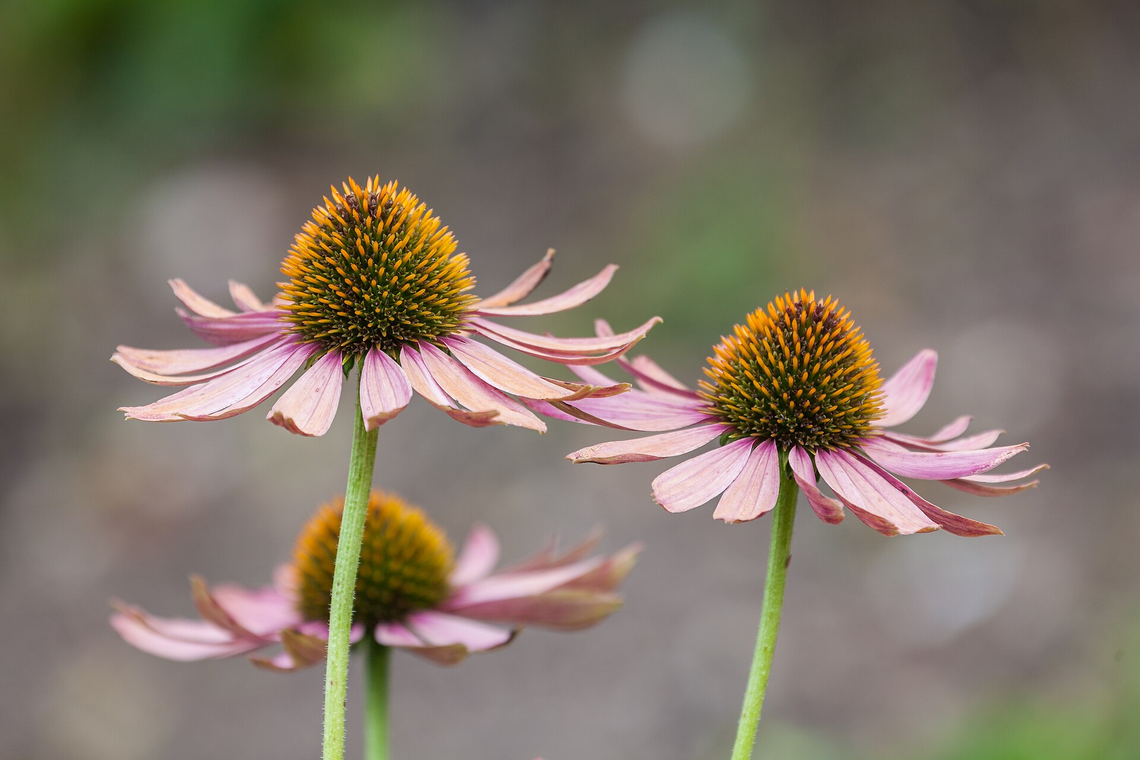
Large composite flower heads 2-4 inches across with 8-21 drooping purple to pink ray petals surrounding a prominent raised central disc of orange-brown tubular flowers; blooms June through October.
fruits/seeds
Small, dark brown to black achenes (cypsela) about 1/8 inch long with a short pappus; seeds are dispersed by wind and wildlife.
Active Compounds
Traditional Uses
- Native American remedy for snakebites, wounds, infections
- Treatment of respiratory infections and colds
- Immune system support during illness
- Topical treatment for skin conditions and wounds
- Pain relief for toothaches and sore throats
Modern Applications
- Immune system modulation and support
- Reduction of cold and flu duration and severity
- Anti-inflammatory effects
- Wound healing acceleration
- Antimicrobial activity against bacteria and viruses
- Potential cancer-fighting properties
⚠️ Safety Information
Contraindications
- Autoimmune diseases (multiple sclerosis, lupus, rheumatoid arthritis)
- Progressive systemic diseases (tuberculosis, leukosis, collagenosis)
- Known allergies to plants in Asteraceae family
Side Effects
- Rare allergic reactions including rash, difficulty breathing
- Gastrointestinal upset in sensitive individuals
- Dizziness or headache with excessive use
- Potential immune system overstimulation
Drug Interactions
- May interfere with immunosuppressive medications
- Potential interaction with hepatotoxic drugs
- May affect metabolism of certain medications
Parts Used
- Roots (most potent)
- Aerial parts (leaves, stems, flowers)
- Fresh plant preparations preferred over dried
Preparation Methods
1-2 teaspoons dried herb per cup boiling water, steep 10-15 minutes
1 tablespoon chopped fresh root per cup water, simmer 15-20 minutes
1:5 ratio in 45% alcohol, 3-5 ml three times daily
Fresh crushed leaves and roots applied directly to wounds
Fresh plant material in olive oil for topical use
Related Plants
Arnica
Arnica montana
Bhringaraj
Eclipta prostrata
Blessed Thistle
Cnicus benedictus
Bacopa
Bacopa monnieri
Coleus / Forskolin
Plectranthus barbatus (syn. Coleus forskohlii)
Black Walnut
Juglans nigra