Yerba Mate
Ilex paraguariensis
Description
overall appearance
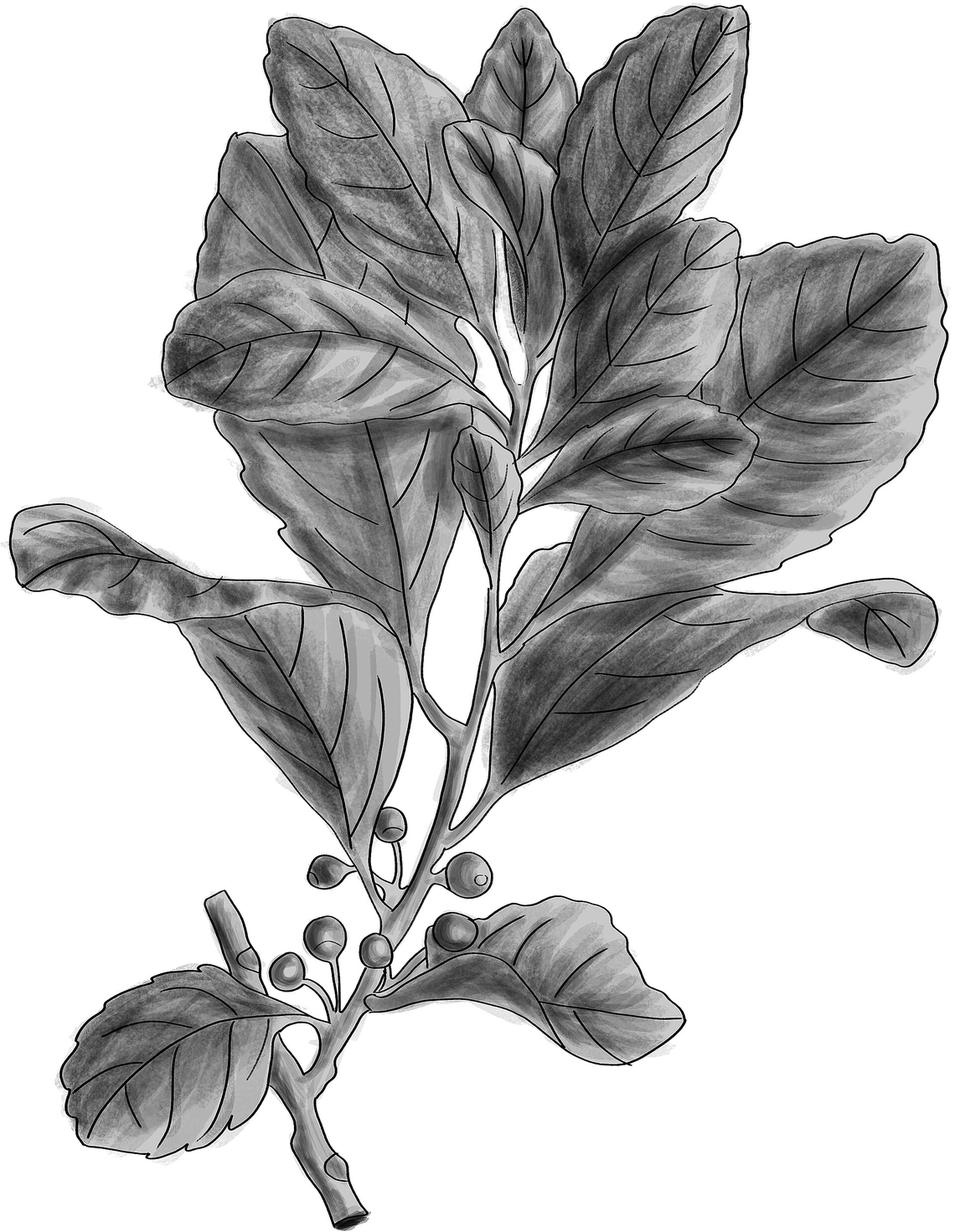
Yerba mate is an evergreen tree or large shrub that can reach 40-50 feet in the wild, though cultivated plants are kept smaller through pruning.
roots
Deep taproot system with spreading lateral roots, adapted to forest conditions and seasonal rainfall patterns.
stem
Smooth, grayish bark covers woody stems. Young branches are often reddish and become woody with age.
leaves
Alternate, leathery leaves are 2-5 inches long, oval with serrated margins. Leaves are dark green and glossy with prominent veining.
flowers
Small, white, four-petaled flowers appear in clusters from leaf axils. Plants are dioecious (separate male and female plants).
fruits/seeds
Small, red berry-like drupes contain 1-8 seeds. Only female plants produce fruits.
Active Compounds
Traditional Uses
- Stimulant beverage and energy enhancement
- Mental alertness and focus
- Digestive aid and appetite stimulant
- Diuretic and kidney support
- Weight management and metabolism
- Social and ceremonial beverage
Modern Applications
- Natural caffeine source and energy booster
- Antioxidant supplementation
- Weight management support
- Mental clarity and cognitive enhancement
- Cardiovascular health support
⚠️ Safety Information
Contraindications
- Pregnancy and breastfeeding (high caffeine content)
- Severe anxiety disorders
- Heart arrhythmias
- Insomnia and sleep disorders
Side Effects
- Caffeine-related effects (jitteriness, insomnia)
- Stomach irritation on empty stomach
- Possible increased blood pressure
- Potential interference with iron absorption
Drug Interactions
- May interact with stimulant medications
- Possible interactions with blood pressure medications
- May enhance effects of other caffeine sources
- Caution with MAO inhibitors
Parts Used
- Leaves (primarily young leaves and small stems)
- Sometimes small twigs and stems
Preparation Methods
Traditional preparation in gourd with bombilla (metal straw)
1-2 tsp leaves per cup water, steep 5-10 minutes
Tereré - cold water preparation popular in Paraguay
1:5 ratio in 40% alcohol, 2-4 ml three times daily
Powdered leaves in standardized preparations
Related Plants
Guayusa
Ilex guayusa
Bacopa
Bacopa monnieri
Celery Seed
Apium graveolens
Alfalfa
Medicago sativa
Blessed Thistle
Cnicus benedictus
Buchu
Agathosma betulina