Description
overall appearance
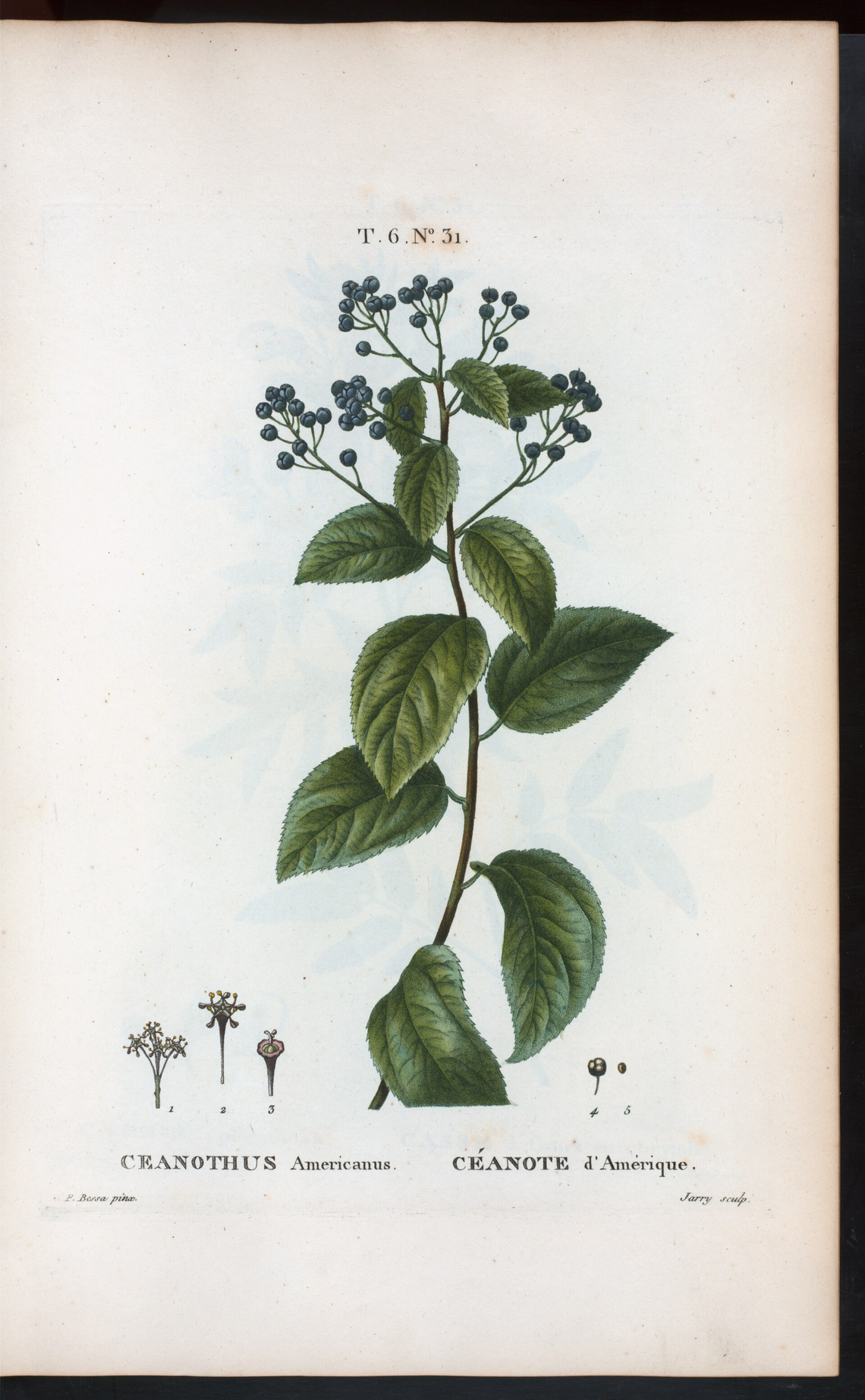
Deciduous shrub growing 3-4 feet tall with dense clusters of small white flowers and distinctive red root system.
roots
Deep, thick, red-colored taproot extending 4-15 feet deep; nitrogen-fixing nodules; extremely drought tolerant.
stem
Multiple woody stems from base; brown bark with smooth texture; dense branching pattern creating rounded shrub.
leaves
Alternate, oval leaves 2-4 inches long; serrated margins; three prominent veins; dull green above, lighter beneath.
flowers
Dense clusters of tiny white flowers in terminal panicles; very fragrant; appear in late spring to early summer.
fruits/seeds
Small, three-lobed capsules that split to release seeds; mature in late summer; important food for wildlife.
Active Compounds
Traditional Uses
- Lymphatic system congestion
- Sore throat and respiratory infections
- Spleen disorders and enlargement
- Blood disorders and circulation
- Dysentery and diarrhea
- Skin conditions and wounds
Modern Applications
- Lymphatic drainage and detoxification
- Immune system support
- Spleen and lymph node health
- Respiratory tract infections
- Anti-inflammatory and antimicrobial effects
- Blood circulation improvement
⚠️ Safety Information
Contraindications
- Pregnancy and breastfeeding (insufficient safety data)
- Low blood pressure (may lower further)
- Scheduled surgery within 2 weeks
Side Effects
- Generally well-tolerated in appropriate doses
- Possible mild digestive upset initially
- Hypotension in sensitive individuals
- Allergic reactions in rare cases
Drug Interactions
- Blood pressure medications (may enhance hypotensive effects)
- Blood-thinning medications (theoretical interaction)
- Immune-suppressing medications
- Diuretic medications
Parts Used
- Root bark (primary medicinal use)
- Inner root (red portion)
- Leaves (mild tea substitute)
- Flowers (occasionally for respiratory issues)
Preparation Methods
1-2 teaspoons dried root bark per cup; steep 15-20 minutes
1 tablespoon chopped root per cup; simmer 20-30 minutes
1:5 ratio with 50% alcohol; macerate chopped fresh root 4-6 weeks
Ground root bark mixed with water for topical applications
Cooled decoction for sore throat and oral infections
Related Plants
Andrographis
Andrographis paniculata
Cleavers
Galium aparine
Hibiscus
Hibiscus sabdariffa
Mangosteen
Garcinia mangostana
Pelargonium / Umckaloabo
Pelargonium sidoides
Pu-erh Tea
Camellia sinensis var. assamica