Description
overall appearance
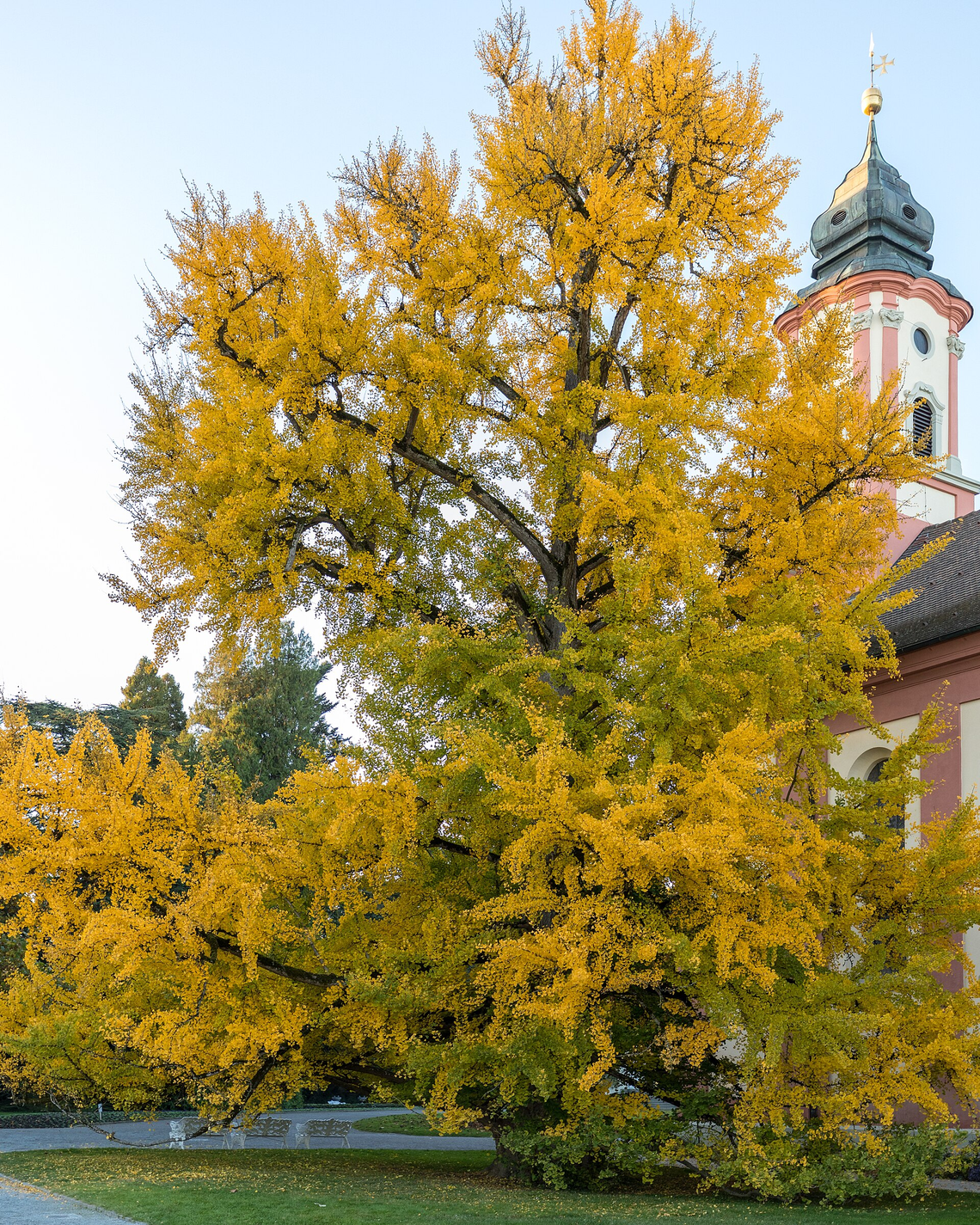
Deciduous tree growing 50-120 feet tall with distinctive fan-shaped leaves and a broad, spreading crown at maturity.
roots
Deep taproot system with extensive lateral roots; forms symbiotic relationships with mycorrhizal fungi.
stem
Straight trunk with gray-brown bark that becomes deeply furrowed with age; branches spread horizontally with short spur shoots.
leaves
Unique fan-shaped (bilobed) leaves 2-5 inches across with parallel venation, bright green turning golden yellow in fall; leaves clustered on short shoots.
flowers
Dioecious (separate male and female trees); male flowers in catkins, female flowers solitary; wind-pollinated, appearing before leaves.
fruits/seeds
Female trees produce plum-like seeds with fleshy, malodorous outer layer and edible inner nut; seeds mature in fall.
Active Compounds
Traditional Uses
- Traditional Chinese Medicine for lung and kidney support
- Seed used for respiratory conditions, urinary disorders
- Memory enhancement and cognitive support
- Circulation improvement, especially to extremities
- Asthma and respiratory allergies
- Tinnitus and hearing problems
Modern Applications
- Cognitive function and memory enhancement
- Peripheral circulation improvement
- Tinnitus and vertigo treatment
- Intermittent claudication (poor leg circulation)
- Age-related macular degeneration
- Anxiety and depression support
- Antioxidant and neuroprotective effects
⚠️ Safety Information
Contraindications
- Bleeding disorders or before surgery
- Known allergy to ginkgo
- Pregnancy and breastfeeding (insufficient safety data)
- Epilepsy (may lower seizure threshold)
Side Effects
- Mild digestive upset, headache, dizziness
- Increased bleeding risk
- Skin allergic reactions (especially from fresh leaves)
- Potential interactions with blood-thinning medications
Drug Interactions
- Blood-thinning medications (warfarin, aspirin)
- Anticonvulsant medications
- Diabetes medications (may affect blood sugar)
- Thiazide diuretics
Parts Used
- Leaves (standardized extracts)
- Seeds (in Traditional Chinese Medicine)
- Rarely bark or other parts
Preparation Methods
EGb 761 and similar standardized preparations
1-2 teaspoons dried leaves, though less effective than extracts
1:5 ratio in 60% alcohol, 1-3 ml three times daily
Standardized extract in capsule form
Cooked seeds in Traditional Chinese Medicine
Related Plants
Bacopa
Bacopa monnieri
Bhringaraj
Eclipta prostrata
Reishi Mushroom
Ganoderma lucidum
Acai
Euterpe oleracea
Alfalfa
Medicago sativa
Arjuna
Terminalia arjuna