Description
overall appearance
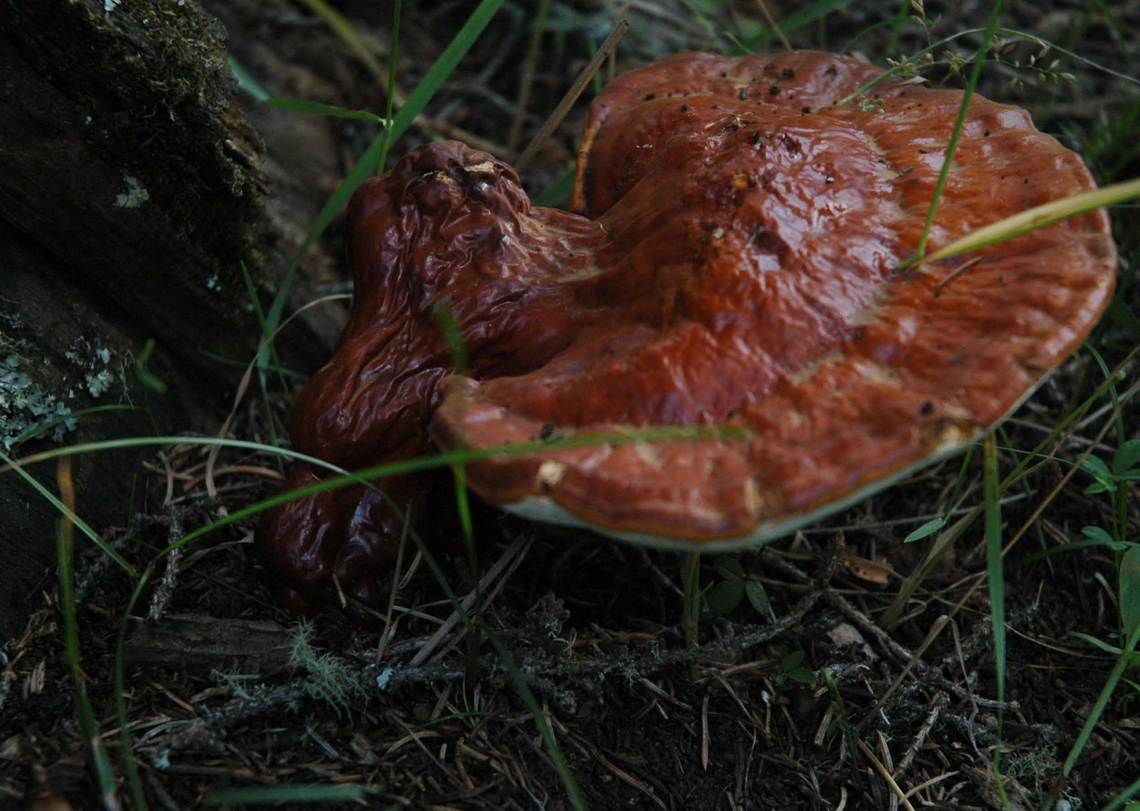
Large, woody bracket fungus with a distinctive glossy, varnish-like surface; kidney-shaped cap with white to yellowish margin when young, becoming reddish-brown to mahogany colored.
roots
No true roots; instead has extensive mycelium (thread-like fungal networks) that penetrate host wood and soil; mycelium is white to cream colored.
stem
Varies from nearly absent to well-developed lateral stem; when present, stem is glossy, hard, and the same color as the cap; can be up to 6 inches long.
leaves
No leaves; reproductive structure consists of pores on the underside of the cap that release spores; pore surface is white when young, becoming brown.
flowers
No flowers; reproduces via microscopic spores released from pores; spores are brown and have a distinctive double wall structure with intricate patterns.
fruits/seeds
The entire mushroom is the fruiting body; spores serve as reproductive "seeds"; mature specimens release billions of spores that appear as brown dust.
Active Compounds
Traditional Uses
- Spiritual enhancement and longevity
- Respiratory conditions and asthma
- Liver protection and detoxification
- Heart disease and circulation problems
- Insomnia and nervous system disorders
- General health tonic and vitality enhancer
- "Shen" (spirit) calming in Traditional Chinese Medicine
Modern Applications
- Adaptogenic stress response support
- Immune system modulation and enhancement
- Liver protection and hepatitis support
- Cardiovascular health and cholesterol management
- Sleep quality improvement and anxiety reduction
- Cancer treatment support and prevention
- Anti-aging and longevity promotion
⚠️ Safety Information
Contraindications
- Bleeding disorders or upcoming surgery
- Organ transplant recipients (may affect immune system)
- Known allergy to fungi or mushrooms
Side Effects
- Mild digestive upset or diarrhea
- Dizziness or drowsiness (rare)
- Skin rash in sensitive individuals
- Possible interactions with blood-thinning medications
Drug Interactions
- Anticoagulant medications (may enhance bleeding risk)
- Immunosuppressive drugs (may counteract effects)
- Chemotherapy drugs (may enhance or interfere with treatment)
- Blood pressure medications (may have additive effects)
Parts Used
- Fruiting body (mushroom cap and stem)
- Spores (concentrated medicinal compounds)
- Mycelium (cultivated underground portion)
Preparation Methods
3-9 grams dried mushroom simmered 1-2 hours (traditionally bitter)
1-3 grams powdered mushroom daily in capsules or mixed in liquid
1:5 ratio in 60% alcohol, 2-4 ml twice daily
Standardized extract containing concentrated triterpenes and polysaccharides
Concentrated extract from spores, highly potent
Related Plants
Jiaogulan
Gynostemma pentaphyllum
He Shou Wu
Reynoutria multiflora
Acai
Euterpe oleracea
Andrographis
Andrographis paniculata
Arjuna
Terminalia arjuna
Ashitaba
Angelica keiskei